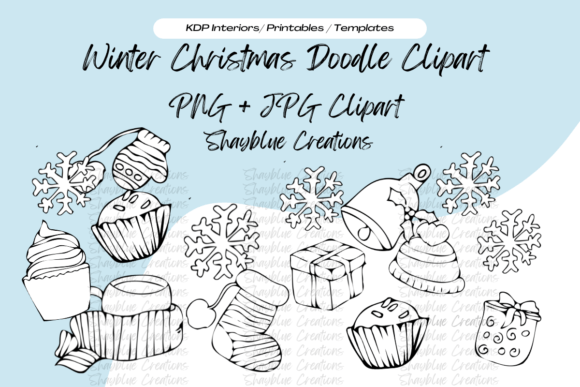
Winter Christmas Black and White Clipart for Modern Illustrations
I recently received a brief from a boutique candle brand looking to refresh their holiday packaging and social media presence. The client wanted something timeless, elegant, and distinct from the typical colorful, cluttered Christmas aesthetic that floods the market every November. They needed Winter Christmas Black and White Clipart that could anchor a sophisticated brand identity without overwhelming the product photography. As a designer who frequently navigates the space between commercial viability and artistic expression, I decided to put this specific design asset through its paces to see if it would hold up in a real-world professional environment.
The First Impression: Mood and Visual Tone
When I first opened the folder containing these Illustrations, the immediate feeling was one of quiet sophistication. Unlike many seasonal assets that rely on heavy saturation or cartoonish elements, this collection exudes a crisp, graphic quality. The stark contrast between the deep blacks and the pure whites creates a visual rhythm that feels both festive and refined. It is the kind of design direction that suggests a high-end bakery, a luxury stationery line, or an artisanal soap maker rather than a generic discount retailer.
The style leans heavily into modern minimalism while retaining traditional holiday symbols. There is a sense of movement in the lines, particularly in how the snowflakes and botanical elements are rendered. This isn't just a static image; it feels like it belongs in a carefully curated editorial layout or a premium product label. For a small business owner trying to elevate their brand identity, this asset offers a level of polish that often requires hours of custom vector work to achieve from scratch.
Performance in Real-World Design Scenarios
In my experience with commercial design, the versatility of a clipart set is determined by how well it adapts to different mediums. I tested these graphics across several mockups relevant to the client's needs. In terms of packaging design, the black and white palette allowed the text to pop against the background without competing for attention. When applied to a matte kraft paper texture for a gift box, the asset transformed the look from rustic to chic instantly.
For social media graphics, specifically for platforms like Instagram and Pinterest, the high contrast ensures visibility even at thumbnail sizes. A Pinterest pin featuring these graphics stands out in a feed filled with saturated reds and greens because it offers a visual pause. I also explored using them as part of a Cricut project for creating vinyl decals on mugs and tote bags. The clean lines cut beautifully, resulting in a sharp finish that looks professionally manufactured rather than homemade.
The asset also proved effective as a digital product for creators selling printable wall art or planner stickers. Because the design relies on form and negative space rather than complex gradients, it scales effortlessly. Whether used for a large hero graphic on a website or a tiny decorative accent on a business card, the integrity of the illustration remains intact. This scalability is crucial for any design bundle intended for resale on creative marketplaces.
Strategic Placement: Where It Shines and Where to Pause
While the potential is high, there are specific contexts where Winter Christmas Black and White Clipart requires careful handling. It excels in large layout areas, such as full-page spreads in editorial design or as a backdrop for promotional posters. Here, the detailed linework can be appreciated, and the monochromatic theme sets a cohesive mood for the entire campaign.
However, caution is advised when placing these assets in crowded layouts or over complex backgrounds. If the surrounding elements are too busy, the fine details of the illustration may get lost, reducing its impact. Similarly, for projects requiring very clean visual hierarchy, such as a corporate annual report or a minimalist tech startup's holiday email, this asset might feel too thematic. In those cases, a more abstract representation of winter would be preferable to maintain professional distance.
Another area to consider is small sizes. While the vector nature of most modern assets helps, extremely small applications, like a favicon or a mobile app icon, might lose definition if the line weight is too thin. In these instances, simplifying the element or increasing the stroke width is necessary to ensure the design remains legible. For sticker design or t-shirt design, however, the asset performs exceptionally well, offering a bold statement that translates perfectly to physical merchandise.
Impact on Readability and Brand Trust
One of the most significant advantages of using this type of graphic design asset is its effect on readability and brand trust. The absence of color forces the viewer to focus on the composition and typography. When paired with a strong serif font, the design evokes a sense of tradition and reliability. Conversely, combining it with a modern sans serif font creates a contemporary, trendy vibe that appeals to younger demographics.
This flexibility allows designers to manipulate the emotional appeal of a project without changing the core imagery. By keeping the visuals monochromatic, the design avoids the risk of clashing with existing brand colors, ensuring consistency across all touchpoints. Whether it is a marketing visual for a local event or a web design element for an online store, the asset adds a layer of visual trust. It signals that the brand pays attention to detail and values aesthetics over flashiness.
In the context of Etsy products or print-on-demand services, this level of professionalism can be the difference between a sale and a scroll-past. Customers often equate the quality of the design with the quality of the product itself. A well-executed black and white illustration suggests a premium offering, which can justify higher price points and foster customer loyalty.
Practical Designer Notes for Commercial Use
Before committing to using Winter Christmas Black and White Clipart in a paid client project, there are several technical checks that must be performed. First, always test the asset in actual black and white. Sometimes files appear grayscale but contain subtle color tints that ruin the intended effect when printed. Check the contrast on both light and dark backgrounds to ensure the lines remain visible and do not vibrate or blur.
File format inspection is equally critical. If you are purchasing a SVG design, verify that the paths are clean and editable. Look for unnecessary nodes or grouped layers that might complicate the workflow in software like Adobe Illustrator or Cricut Design Space. If the asset comes as a PNG design, inspect the transparency around the edges. Jagged pixels or white halos can ruin a print job, especially on colored substrates.
Printing is another vital step. Preview the design at the exact size it will be produced to check for pixelation or loss of detail. A file that looks perfect on a 4K monitor might reveal jagged edges when printed on a large banner. Additionally, review the licensing agreement thoroughly. Ensure that the commercial license covers your specific use case, whether it is for unlimited print runs, digital ads, or resale as part of a template pack.
Finally, compare the asset with various font styles to find the best pairing. A handwritten font might clash with the geometric precision of some illustrations, while a display font could complement the whimsical nature of others. By taking the time to test these combinations, you ensure that the final output feels cohesive and intentional.
Ultimately, Winter Christmas Black and White Clipart is more than just a seasonal decoration; it is a versatile tool for elevating visual communication. For designers, marketers, and small business owners, it offers a pathway to create polished, memorable designs that stand the test of time. When used with intention and technical care, this asset can transform a simple holiday greeting into a powerful brand statement.